
Top 14 Betting Guide: French Rugby Odds & Tips
 Available in US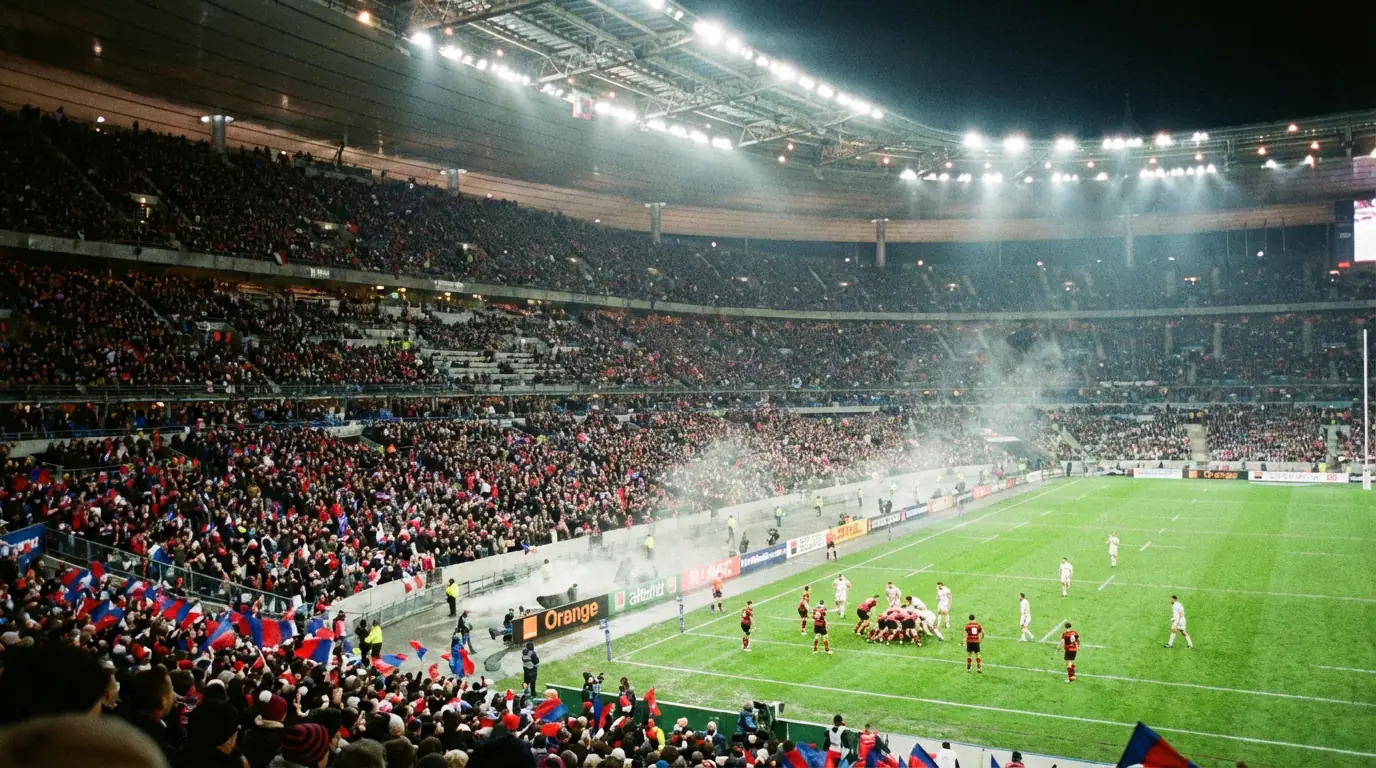

The Top 14 is European rugby’s richest domestic league, and that wealth translates directly into what bettors care about most: depth of competition. French clubs operate with budgets that dwarf their counterparts in England, Ireland, or the southern hemisphere, allowing them to assemble squads packed with international talent from across the globe. The result is a league where genuine upsets aren’t upsets at all — they’re simply what happens when fourteen well-funded, well-coached teams play each other every week.
For bettors, the Top 14 represents both opportunity and danger. The opportunity lies in the league’s inherent unpredictability, which means bookmaker models struggle to consistently price matches correctly. The danger lies in that same unpredictability catching you out. This guide covers the structural factors that drive Top 14 betting value: the competitive depth, the extraordinary home advantage effect, and the playoff dynamics that make end-of-season betting a different proposition entirely.
Exploiting Squad Depth in Top 14 Betting
When people say the Top 14 is deep, they’re not being polite. This is a league where the team finishing twelfth might have a squad containing 15 current or recent internationals. Stade Français, Racing 92, Castres, Montpellier — clubs that regularly finish in the bottom half would comfortably compete for titles in most other leagues. That depth makes match prediction genuinely difficult, and difficult prediction environments are where informed bettors thrive.
The depth effect shows up most clearly in handicap markets. Because the quality gap between Top 14 teams is relatively narrow, large handicaps rarely materialise. You’ll see -3.5 and -7.5 lines far more often than the -15.5 or -20.5 spreads that appear regularly in competitions with clearer hierarchies. This compression means that single moments — a yellow card, a refereeing decision, a lucky bounce — have an outsized impact on handicap outcomes. Bettors who understand this and size their stakes accordingly (smaller on handicaps, where variance is high) will manage their bankrolls more effectively than those who treat Top 14 handicaps like Premiership ones.
The squad depth within individual clubs also creates a distinctive Top 14 dynamic: rotation is constant and strategic. French coaches routinely make six, eight, or even ten changes between matches, particularly when European fixtures are interspersed with league rounds. Unlike in other leagues where rotation signals a weaker team, in the Top 14, a rotated squad might still be formidably strong. The challenge for bettors is distinguishing between meaningful rotation (resting first-choice players for a bigger match) and cosmetic rotation (swapping between two equally capable players). Following French rugby media — outlets like Midi Olympique and Rugby Rama — is essential for understanding which changes matter and which don’t.
Home Advantage: The Top 14’s Defining Betting Factor
If there’s one statistical fact every Top 14 bettor must internalise, it’s this: home advantage in French rugby is among the strongest in professional sport. Historically, home teams in the Top 14 win well over 60% of matches, and in some seasons that figure climbs higher. The reasons are cultural, geographical, and atmospheric.
Culturally, French rugby clubs are community institutions in a way that English or southern hemisphere franchises rarely match. Towns like Castres, Pau, and Bayonne live and breathe for their rugby teams. The crowd isn’t just supportive — it’s ferocious. Visiting teams face a hostile atmosphere that goes beyond noise; it’s a concentrated intensity that affects decision-making, particularly at set pieces and in the final quarter of tight matches.
Geographically, the Top 14 involves genuine travel challenges. France is a large country, and the league stretches from Bayonne and Pau in the southwest to Racing 92 and Stade Français in Paris, from Clermont in the mountainous Massif Central to Toulon on the Mediterranean coast. Teams aren’t just crossing time zones — they’re navigating genuinely different climates, altitudes, and playing surfaces. Clermont’s Stade Marcel-Michelin sits at over 400 metres elevation, and visiting teams from sea-level cities notice the difference. The thick grass surfaces favoured by certain French clubs contrast with the firmer pitches at others, affecting scrum dynamics and running play alike.
For bettors, the implication is clear: home teams in the Top 14 deserve more respect than in almost any other rugby competition. This doesn’t mean blindly backing every home side — that’s a losing strategy in any sport. But it does mean that your default expectation should lean toward the home team, and you should require specific, strong evidence to bet against them. An away win in the Top 14 is always earned, never given, and your betting should reflect that reality.
Playoff Dynamics: When the Top 14 Transforms
The Top 14 regular season is a 26-round marathon, but it’s the playoffs that define the campaign — and they operate under a distinctive format that bettors must understand. The top six qualify, with the top two earning direct semi-final berths and a week’s rest. Teams finishing third through sixth play in a barrage round (quarter-finals), with the winners advancing to meet the top two. Semi-finals and the final are played at neutral venues, which strips away the home advantage that dominated the regular season.
This structural shift has profound betting implications. Teams that built their league position on the back of dominant home records suddenly lose that edge. A club that went 12-1 at home during the regular season now faces opponents on neutral turf, and their true competitive level — shorn of the passionate home crowd and familiar pitch — is revealed. Historically, the highest-seeded team in the Top 14 playoffs doesn’t win the title as often as you might expect. The format rewards teams that peak at the right moment rather than those that accumulated the most regular-season points.
The barrage round is particularly interesting for bettors. These are sudden-death matches between evenly matched teams who’ve often split results during the regular season. The pressure is enormous, and the team with the slightly higher seeding — and therefore notional home advantage — doesn’t always cope with it better. If anything, the pressure of being expected to advance can weigh more heavily than the freedom of being the underdog with nothing to lose. Look for value on lower-seeded teams in the barrage, especially those with playoff experience and a coaching staff that has been through knockout rugby before.
Semi-finals at neutral venues — typically the Stade Vélodrome in Marseille or Stade Pierre-Mauroy in Lille — tend to be tight, defensive affairs. The combination of neutral ground, high stakes, and two quality teams produces lower-scoring matches than regular-season averages would suggest. If you’ve been profiting from overs in the regular season, consider shifting toward unders as the playoffs begin. Defensive intensity ratchets up, risk appetite drops, and kicking for territory replaces the more expansive rugby seen in the league phase.
Navigating the Transfer Market and Off-Season Value
The Top 14 transfer window is one of the most active in rugby, and staying across roster movements provides a genuine informational edge. French clubs don’t just recruit — they hoover up talent. A mid-table club might sign three or four established internationals in a single off-season, fundamentally altering their competitive profile. Meanwhile, a club that loses its star playmaker to retirement or a move abroad might see its entire attacking structure disrupted.
Pre-season is the ideal window for identifying outright futures value. Bookmakers set their initial Top 14 winner odds based heavily on the previous season’s finishing positions, but squad composition often tells a different story. A club that finished eighth but made shrewd signings — a world-class fly-half, a dominant tighthead, a proven lineout caller — might be significantly undervalued at 20/1 or higher. Conversely, the defending champions who lost their talismanic captain might be overvalued at 3/1 simply because the market hasn’t fully digested the departure.
Track the movement of key positional players, particularly fly-halves and hookers. In French rugby, the fly-half controls everything — the kicking game, the tempo, the tactical direction. A club that upgrades at 10 improves across every phase of play. Similarly, the hooker’s lineout throwing is critical in a league where set pieces often decide tight matches. These aren’t glamorous signings that generate headlines, but they’re the ones that shift competitive balance.
The Saturday Night Atmosphere Index
There’s a final, somewhat unquantifiable factor in Top 14 betting that deserves attention: the emotional calendar of French rugby. Certain fixtures carry weight that transcends league points. Local derbies — Toulouse versus Castres, Bayonne versus Pau, Racing 92 versus Stade Français — produce performances that bear little resemblance to either team’s recent form. Players raise their intensity, crowds reach a different decibel level, and the match takes on a character that regular form analysis fails to predict.
Similarly, end-of-season matches carry different emotional charges depending on what’s at stake. A team fighting relegation in the final rounds plays with a desperation that can overwhelm a mid-table side with nothing to play for. Conversely, a top-two team that has already secured its semi-final spot might field a weakened side in the final regular-season round, creating an opportunity for an alert bettor to back the underdog. Reading the emotional temperature of a Top 14 fixture — understanding what each team is playing for beyond the simple league table — is a skill that develops over seasons of watching and wagering on French rugby. It can’t be reduced to a spreadsheet column, but it consistently shows up in the margins where bets are won and lost.
