
Rugby Totals Betting: Over/Under Strategy
 Available in US
Totals betting offers rugby punters an alternative to picking winners, focusing instead on predicting combined scoring output. When bookmakers set a line at 45.5 points, you’re simply deciding whether both teams together will score more or less than that threshold. This seemingly simple proposition conceals considerable complexity, as scoring in rugby depends on numerous variables that interact in ways casual observers often miss.
The appeal of totals betting lies partly in its independence from match outcomes. You can back the over in a contest between bitter rivals without caring which team wins, freeing analysis from the emotional baggage that clouds winner prediction. You can also find yourself rooting for both teams simultaneously, celebrating tries regardless of which side scores them. This psychological freedom helps some bettors maintain objectivity that handicap and moneyline markets compromise.
This guide examines totals betting across both rugby codes, exploring the factors that drive scoring, the patterns that inform predictions, and the analytical approaches that identify mispriced lines. Whether you’re completely new to over/under markets or looking to refine existing strategies, understanding the mechanics of rugby scoring will sharpen your totals betting considerably.
Mechanics of Rugby Totals Markets
Totals markets in rugby function similarly to their counterparts in other sports, but with nuances specific to the oval ball game. Bookmakers set a line representing their expectation for combined scoring, then offer odds on both sides of that number. Standard pricing approaches -110 on both over and under, though this varies by bookmaker and betting volume.
The half-point in totals lines, such as 45.5 rather than 45, eliminates pushes and ensures definitive outcomes. When you see whole number lines like 44 or 46, bookmakers typically include push rules where exact totals return stakes. Understanding these mechanics matters because fractions of points affect results in rugby less frequently than in lower-scoring sports like soccer, but still influence outcomes often enough to matter.
Line movement in totals markets reflects both sharp betting action and public sentiment. When early money heavily favors one side, bookmakers adjust to balance their exposure. Tracking where lines open versus where they close reveals which direction sharp bettors are betting. Consistently betting with closing line movement, meaning your positions match where sharp money pushed lines, correlates strongly with long-term profitability.
Alternative totals expand betting options beyond the primary line. If the main total sits at 45.5 but you believe the match will be extremely high-scoring, you might find value on an alternate over of 55.5 at enhanced odds. Conversely, expecting a defensive struggle might make under 35.5 attractive despite the shorter price. These alternative lines allow bettors to express more precise predictions than single-line markets permit.

Rugby Union Scoring Patterns
Understanding how points accumulate in Rugby Union requires appreciating the sport’s varied scoring methods and tactical considerations. The five-point try, two-point conversion, three-point penalty, and three-point drop goal create scoring combinations that follow certain patterns.
Test match scoring between tier-one nations typically produces combined totals between 35 and 55 points, with the median falling around 44-46 points. However, significant variance exists based on opponents, conditions, and tournament context. Six Nations matches historically produce lower totals than Rugby Championship fixtures, partly due to weather differences and partly due to stylistic variations between hemispheres.
Domestic league scoring runs higher than international equivalents. The URC, Premiership, and Top 14 regularly produce matches exceeding 50 combined points, as club defenses organize less cohesively than international setups. Betting totals in domestic competitions requires different baselines than applying international expectations to club rugby.
Mismatch scoring in pool stages of tournaments presents distinct patterns. When tier-one nations face emerging rugby countries, totals can exceed 80 or even 100 points. However, these mismatches often see favorites ease off after building commanding leads, preventing totals from reaching their theoretical maximums. Understanding when elite teams will push for bonus points versus manage games affects predictions significantly.
Scoring distribution by half reveals important patterns. First halves typically produce slightly fewer points than second halves in Rugby Union, as teams settle into matches and fatigue creates space later. However, matches where one team builds substantial first-half leads often see reduced second-half scoring as trailing teams cannot sustain the intensity required to threaten comebacks.

Rugby League Scoring Patterns
Rugby League’s different scoring system and structural gameplay produces distinct totals patterns from Union. The four-point try, two-point conversion, two-point penalty, and one-point drop goal create different combinations, while the tackle count system ensures more predictable possession distribution.
NRL scoring consistently runs higher than Super League equivalents. Australian conditions, superior handling on firm pitches, and attacking philosophies combine to produce regularly totals exceeding 40 points. Super League matches, contested through English winter conditions, often see lines set in the mid-30s.
State of Origin scoring defies typical League patterns. The representative series between New South Wales and Queensland produces attritional, defensive rugby that regularly finishes under totals derived from NRL averages. The intensity and significance of Origin matches compress scoring ranges, making unders historically profitable despite League’s usually high-scoring nature.
Finals football in both NRL and Super League produces tighter margins and lower totals than regular season fixtures. Teams approach knockout matches with increased defensive discipline, coaches minimize risk-taking, and scoreboard pressure prevents the expansive play that characterizes meaningless encounters. Adjusting totals expectations downward for finals proves essential.
Weather effects impact League scoring less dramatically than Union because the structured nature of possession means dropped balls waste opportunities rather than creating turnovers. However, handling remains more difficult in rain, and teams become more conservative with ball security when conditions deteriorate.

Factors Driving Totals Higher
Identifying conditions that favor high-scoring matches allows bettors to recognize over opportunities before markets fully adjust. Several factors reliably correlate with elevated scoring.
Attacking philosophies from both coaches create compound effects. When two teams committed to running rugby meet, combined scoring often exceeds projections based on either team’s individual averages. The absence of one conservative side preventing entertainment produces more tries than head-to-head records might suggest.
Defensive injuries or absences remove resistance that normally limits scoring. When key defenders, particularly first-choice centers or back-row flankers, miss matches through injury or suspension, replacement players typically underperform. Tracking team news for defensive absences informs totals betting significantly.
Favorable pitch conditions allow handling and running that wet or heavy surfaces prevent. Dry, firm pitches produce the cleanest execution and fastest gameplay. Matches on excellent surfaces, particularly in the southern hemisphere during optimal seasons, regularly exceed totals projections based on broader averages.
Referee tendencies influence scoring through penalty frequency and advantage playing. Referees who keep whistles quiet and play extended advantages create flowing matches with more scoring opportunities. Conversely, referees who call matches tightly disrupt attacking rhythm and produce more penalty-kick attempts relative to tries. Researching appointed referees reveals tendencies worth incorporating into totals analysis.
Competitive stakes imbalances produce high scoring when one team desperately needs points while opponents have nothing to play for. End-of-season matches where contenders face eliminated teams often see totals exceed expectations, as urgency meets apathy. Similarly, pool matches where only one team requires bonus points can produce unexpected shootouts.
Historical head-to-head patterns sometimes persist despite changes in personnel and circumstances. Certain rivalries consistently produce high-scoring affairs through stylistic matchups that neither side can resolve. Identifying these persistent patterns provides edges against lines set using broader team averages.
Factors Driving Totals Lower
Recognizing conditions that suppress scoring helps identify under opportunities that markets may overprice. Several factors reliably correlate with reduced combined points.
Defensive matchups between well-organized sides with coaching emphasis on prevention produce grinding contests. When two teams coached by defensive-minded staff meet, expecting typical scoring levels invites disappointment. Identifying these matchups requires understanding coaching philosophies beyond simple team statistics.
Weather deterioration affects Union more dramatically than League but impacts both codes. Rain, wind, and cold temperatures all reduce scoring by compromising handling, limiting kicking options, and slowing ball movement. Checking forecasts before placing totals bets should become automatic practice.
Altitude effects at venues like those in South Africa can reduce scoring when teams unused to thin air visit. The fatigue that altitude induces limits attacking capacity and encourages conservative approaches. However, teams accustomed to altitude may exploit opponents’ struggles to produce mismatches that actually increase scoring.
Tournament knockout stages compress scoring ranges across both codes. The stakes involved in elimination matches encourage conservative tactics, with teams protecting leads rather than chasing bonus points. Grand finals historically produce lower totals than regular season averages between the same opponents.
Early season rust manifests in poor execution, handling errors, and disjointed attacking play. The first matches of new seasons often underwhelm scoring expectations as teams rebuild cohesion after off-seasons. Adjusting expectations downward for season-opening fixtures captures this pattern.
Scheduling congestion produces fatigue that limits attacking intensity. Teams playing third matches in short windows, particularly following travel, rarely produce their typical scoring outputs. Tracking schedules and identifying exhausted teams informs under positions.
Analyzing Team-Specific Tendencies
Totals betting requires understanding how individual teams score and concede, not just league-wide averages. Team-specific analysis reveals patterns that generic lines may not capture.
Offensive efficiency metrics quantify attacking productivity. Points per possession, tries per 22-meter entry, and conversion rates all measure how effectively teams turn opportunities into points. Teams with high offensive efficiency but moderate possession typically produce scoring patterns different from possession-dominant sides with lower conversion rates.
Defensive efficiency metrics reveal concession patterns. Points allowed per opposition possession, tries conceded per 22-meter entry allowed, and tackle completion rates quantify defensive reliability. Matching offensive efficiency against defensive efficiency for specific matchups produces more accurate totals projections than simple scoring averages.
Home/away scoring splits show significant differences for many teams. Some sides score substantially more at home due to crowd support, familiar conditions, or home-field advantages in set pieces. Others show minimal splits. Understanding these patterns affects totals projections when home advantage factors haven’t been priced correctly.
Rest advantage effects vary by team based on squad depth and coaching approaches. Teams with deep benches and good injury management maintain scoring levels better under scheduling pressure than thin squads. Identifying which teams handle congestion poorly helps predict when normally high-scoring sides will underperform.
Recent form trajectories indicate whether teams are peaking, declining, or maintaining consistent performance. Teams trending upward often exceed totals expectations based on season averages, while declining teams underperform. Simple recent form metrics, weighted toward most recent matches, capture these trajectories.
Weather and Conditions Analysis
Environmental factors influence rugby scoring more dramatically than in most sports, making conditions analysis essential for totals betting. Understanding how specific conditions affect gameplay reveals opportunities when markets misprice weather impacts.
Rain effects manifest differently based on intensity and timing. Light rain during matches affects scoring less than heavy pre-match precipitation that waterloggs pitches. Persistent heavy rain throughout matches dramatically reduces handling quality and scoring in Union, with somewhat smaller effects in League. Checking not just forecast conditions but precipitation timing maximizes analytical value.
Wind effects particularly impact kicking games. Strong, swirling winds make goal-kicking unreliable, potentially reducing penalty and conversion success rates. However, wind also disrupts defensive organization from restarts and kicks, occasionally creating scoring opportunities that offset kicking difficulties. The net effect depends on how heavily involved teams’ game plans rely on goal-kicking versus try-scoring.
Temperature extremes influence scoring through effects on ball handling and player fatigue. Cold conditions make balls harder and more difficult to grip, while extreme heat accelerates exhaustion. Both extremes typically reduce scoring from optimal-conditions baselines, though effects vary by how well-prepared teams are for specific conditions.
Pitch conditions beyond weather matter significantly. Some venues have notorious drainage problems that create heavy conditions even without recent rain. Others maintain excellent surfaces regardless of weather. Knowing specific venue characteristics helps adjust expectations beyond simple weather forecasts.
Altitude adjustments affect matches at elevated venues, particularly in South Africa. The Highveld stadiums around Johannesburg sit at altitudes that noticeably affect fitness and ball flight. Teams from lower altitudes often struggle with both fatigue and judging kicks, typically producing lower scoring than their normal outputs.
Market-Specific Strategies
Different approaches suit different totals markets, and matching strategies to market types improves results. Understanding when to employ various approaches maximizes edge exploitation.
Main line betting suits situations where you have moderate confidence in over or under outcomes. Standard pricing around -110 provides decent returns without requiring extreme confidence. Focus on matches where your analysis suggests 2-3 point deviations from the line, giving reasonable margins for error.
Alternative totals suit high-confidence predictions where main lines offer insufficient payoff. When you strongly expect a defensive struggle, taking under at a lower alternative total (say, 35.5 when the main line is 44.5) reduces risk while accepting lower returns. When expecting a shootout, over on a higher alternative (say, 55.5) provides enhanced payoff for correct predictions.
First half totals isolate analysis to forty-minute segments. Some teams start quickly before fading, while others finish stronger than they begin. First half markets let you exploit these patterns without needing full-match accuracy. The key insight is that half totals don’t always equal half of full-match totals. Factor in how teams distribute scoring by period.
Team totals allow betting on individual team scoring rather than combined output. These markets prove useful when you have strong views on one team’s likely output but uncertainty about opponents. A team likely to score heavily against a porous defense can be backed on team totals over regardless of uncertainty about how many points they’ll concede.
Live totals adjust as matches progress, offering opportunities to lock in positions or hedge existing bets. If you backed the over pre-match but first-half scoring exceeded expectations, you might back the under on second-half markets to guarantee profit regardless of how the remainder unfolds. Live totals also allow entering positions mid-match when developments suggest totals will move directionally.
Building Totals Models
Systematic approaches to totals betting require models that project expected scoring and compare projections to market lines. Building effective models involves several components.
Baseline projections start with average scoring for the competition. Six Nations matches average certain combined totals, NRL matches average different amounts, and so forth. These baselines provide starting points before team-specific and situational adjustments.
Team adjustment factors modify baselines based on how specific teams deviate from averages. If a team’s matches average 8 points above competition averages in combined scoring, that adjustment applies when they play. Calculating separate offensive and defensive adjustments allows matching specific attackers against specific defenders.
Situational adjustments incorporate non-team factors that influence scoring. Home advantage, rest differential, weather conditions, referee appointments, and competitive stakes all deserve systematic treatment. Quantifying the typical impact of each factor allows consistent application across matches.
Line comparison translates projections into betting decisions. When your model projects 48 combined points and the market line sits at 44.5, the over appears valuable. The size of the discrepancy indicates confidence level and appropriate stake sizing. Small edges warrant smaller bets; large discrepancies justify larger positions.
Outcome tracking enables model improvement over time. Recording projections alongside actual results reveals systematic biases in your modeling. Perhaps you consistently underestimate certain factors or overweight others. This feedback loop allows refinement that improves accuracy over seasons.

Common Totals Betting Mistakes
Recognizing frequent errors helps avoid the traps that consume totals betting bankrolls. These mistakes stem from predictable cognitive biases and information processing failures.
Overweighting recent matches leads bettors to project unusual results forward inappropriately. When two high-scoring teams meet after each played defensive struggles the previous week, markets sometimes underprice totals because recent results loom larger than typical patterns. Similarly, one high-scoring match doesn’t transform a normally conservative team’s expected outputs.
Ignoring situational factors produces predictions based on context-free averages. Teams’ scoring changes based on opponents, conditions, stakes, and schedules. Using season averages without situational adjustments ignores variance that dramatically affects specific match totals.
Misunderstanding score distribution leads to inappropriate totals conclusions. Knowing that a team averages 28 points doesn’t reveal whether they consistently score in the high 20s or wildly vary between single-digit and 40-plus performances. High-variance teams produce different totals betting implications than consistent sides even with identical averages.
Neglecting game state effects ignores how match dynamics influence late scoring. Teams protecting leads often surrender late scores that push totals over but don’t affect match outcomes. Teams trailing hopelessly sometimes score consolation points that similarly affect totals without changing results. Understanding these game state patterns refines predictions.
Failing to shop lines costs bettors significant expected value. Different bookmakers offer different totals lines, sometimes by full points. Holding accounts at multiple sportsbooks and comparing lines before placement should become standard practice for serious totals bettors.
Bankroll Management for Totals Betting
Totals betting produces specific variance patterns that inform appropriate bankroll management. Understanding these patterns helps size bets and manage expectations.
Variance in totals runs somewhat lower than handicap betting because you’re not predicting winners, merely scoring levels. However, margins of victory in totals outcomes don’t produce partial wins as handicaps sometimes do with pushes. You either win or lose each bet entirely, making unit sizing decisions important.
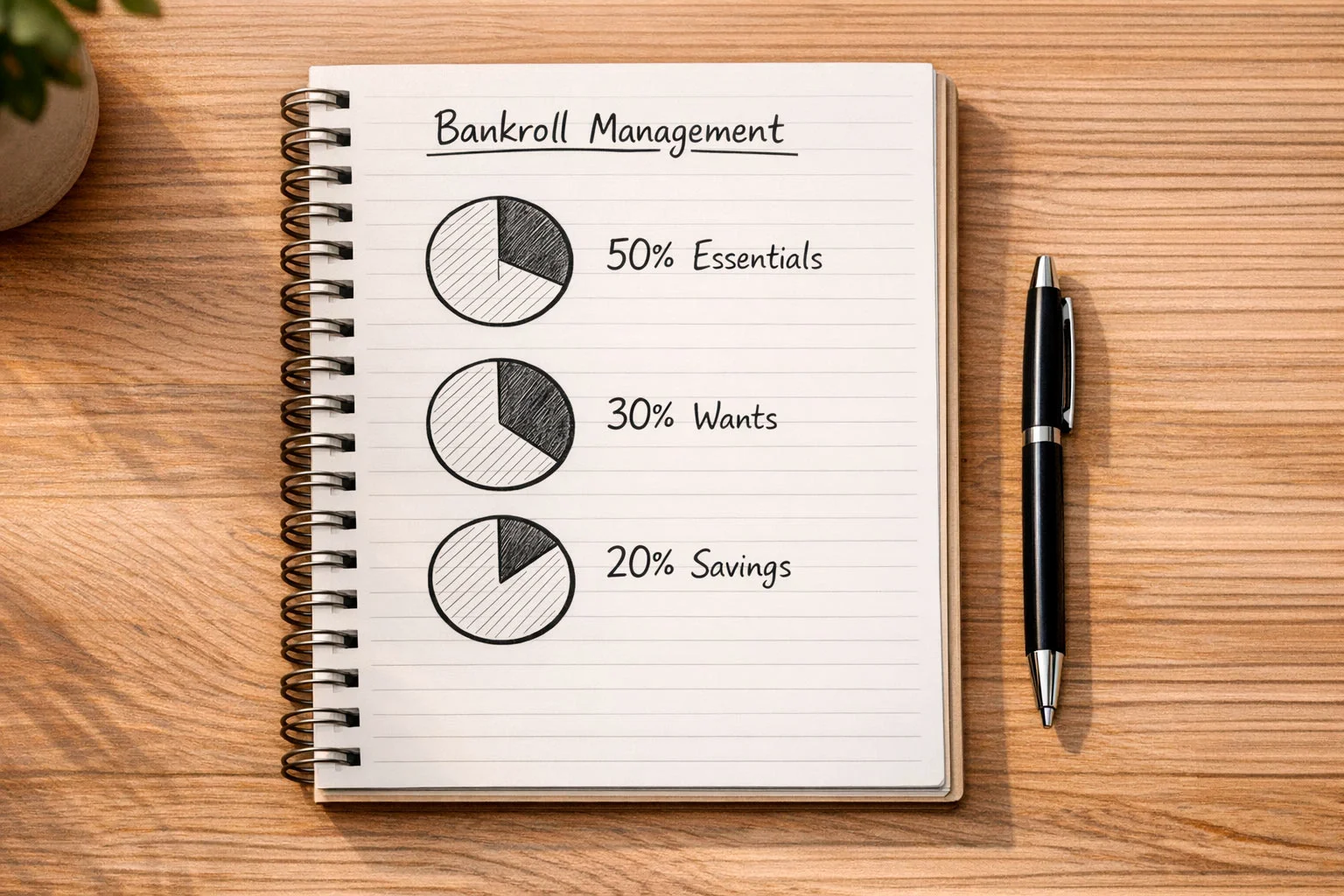
Unit sizing recommendations for totals betting typically fall between 1-3% of bankroll per bet. Stronger edges warrant larger percentages up to the 3% ceiling, while standard opportunities deserve baseline 1% stakes. Never exceeding these limits regardless of confidence protects against the variance that affects all sports betting.
Correlation considerations affect bankroll risk when placing multiple totals bets simultaneously. If you back overs in several matches of the same competition on the same day, weather or other factors affecting all matches create correlated outcomes. Winning or losing multiple bets together increases variance compared to uncorrelated positions. Diversifying across competitions and conditions smooths returns.
Long-term perspective proves essential because totals betting edges are typically small. Expecting consistent short-term profits invites disappointment when variance produces losing streaks. Evaluating results over hundreds of bets rather than dozens provides meaningful sample sizes for assessing strategy effectiveness.
Conclusion
Totals betting in rugby rewards bettors who understand the factors driving scoring, the patterns that teams and competitions exhibit, and the analytical approaches that identify mispriced lines. The independence from picking winners provides psychological freedom that helps some bettors maintain objectivity, while the market mechanics create opportunities for systematic exploitation.
Success requires developing genuine understanding of how rugby scoring works across both codes and specific competitions. Generic approaches based on superficial analysis rarely generate sustainable edges against bookmakers who employ sophisticated modeling. Building team-specific knowledge, tracking conditions and situations, and maintaining disciplined execution provides the foundation for profitable totals betting.
Start by focusing on single competitions where you can develop deep familiarity with team tendencies, referee assignments, and venue characteristics. As your understanding develops and records confirm positive expected value, gradually expand to additional markets. The goal is consistent edge identification and exploitation, not action for its own sake. Patient, informed totals bettors who wait for genuine value consistently outperform those betting every match simply because lines exist.
