
Rugby Union vs League Betting: Key Differences
 Available in US
Rugby betting has grown into a massive global market, attracting millions of punters who appreciate the physicality, unpredictability, and sheer drama of the sport. But here’s the thing that trips up even experienced sports bettors: rugby isn’t just one sport. It’s two distinct codes with fundamentally different rules, scoring systems, and betting dynamics. Walking into a sportsbook without understanding the difference between Rugby Union and Rugby League is like trying to bet on American football using soccer knowledge. You might get lucky, but you’re essentially gambling blind.
The distinction between these two codes matters enormously for anyone serious about making informed wagers. Each version of rugby produces different scoring patterns, favors different player types, and creates unique betting opportunities. Union tends toward tactical battles where territory and set pieces dominate, while League is a faster, more structured affair with predictable play sequences. These fundamental differences translate directly into how betting markets behave, what lines bookmakers set, and where value can be found.
This guide breaks down everything you need to know about betting on both codes. We’ll examine the rules that shape each game, analyze how scoring differences affect totals markets, explore the major competitions worth following, and ultimately help you decide which format aligns better with your betting style. Whether you’re completely new to rugby betting or looking to expand from one code to the other, understanding these distinctions will sharpen your analysis and improve your decision-making.
Rugby Union: Rules, Scoring, and Gameplay

Rugby Union is the older and more globally widespread of the two codes, played in over 120 countries with particular strongholds in the British Isles, France, South Africa, New Zealand, and Australia. The sport features 15 players per side on a rectangular pitch, creating a game that balances set-piece complexity with open-field play. Union matches are characterized by contested scrums, lineouts, rucks, and mauls, all of which create tactical depth that directly influences betting considerations.
The gameplay in Union flows continuously until the ball goes out of play or an infringement occurs. Teams can retain possession through multiple phases, building pressure through pick-and-go plays around the breakdown or spreading the ball wide to exploit overlaps. The contested nature of possession means that momentum swings can happen quickly, with turnovers at the ruck or dominant scrum performances completely shifting the game’s direction. For bettors, this translates into volatility that creates opportunities in live markets but also makes predicting final margins more challenging.
Understanding the forward-back dynamic in Union proves essential for certain markets. The forwards, those eight larger players engaged in scrums and lineouts, do the grunt work of securing possession and gaining territory. The backs, seven faster and typically more agile players, usually finish off tries when space opens up. However, modern Union has evolved considerably, with athletic forwards frequently appearing on the scoresheet. When analyzing try scorer markets, you can’t simply assume wingers will score most tries, as driving mauls from lineouts near the goal line often result in forwards touching down.
How Points Are Scored in Rugby Union

Rugby Union’s scoring system creates distinct patterns that bettors must internalize. A try, the equivalent of a touchdown, is worth five points and requires a player to ground the ball with downward pressure over the opponent’s try line. After each try, the scoring team attempts a conversion kick worth two points, taken from a spot perpendicular to where the try was scored. This creates interesting dynamics, as tries scored beneath the posts are easier to convert than those touched down in the corners.
Penalty kicks, awarded for various infractions, are worth three points when successfully kicked through the posts. Teams often face decisions between taking the three guaranteed points or kicking for touch to set up an attacking lineout. This tactical choice depends on match context, score differential, and confidence in the team’s finishing ability. For bettors analyzing potential scorelines, recognizing when teams are likely to take the posts versus playing for tries fundamentally affects total points projections.
Drop goals, though relatively rare in modern Union, remain worth three points. A player must drop the ball onto the ground and kick it through the posts during open play. Some fly-halves are specialists at this skill, and certain coaches incorporate drop goals into their game plans when leading narrowly in closing stages. The famous 2003 World Cup final, decided by Jonny Wilkinson’s drop goal in extra time, demonstrates how this scoring method can prove decisive in tight contests. Recognizing which teams and players favor this approach can inform your in-play betting decisions.
Rugby League Explained: Rules, Scoring, and Gameplay
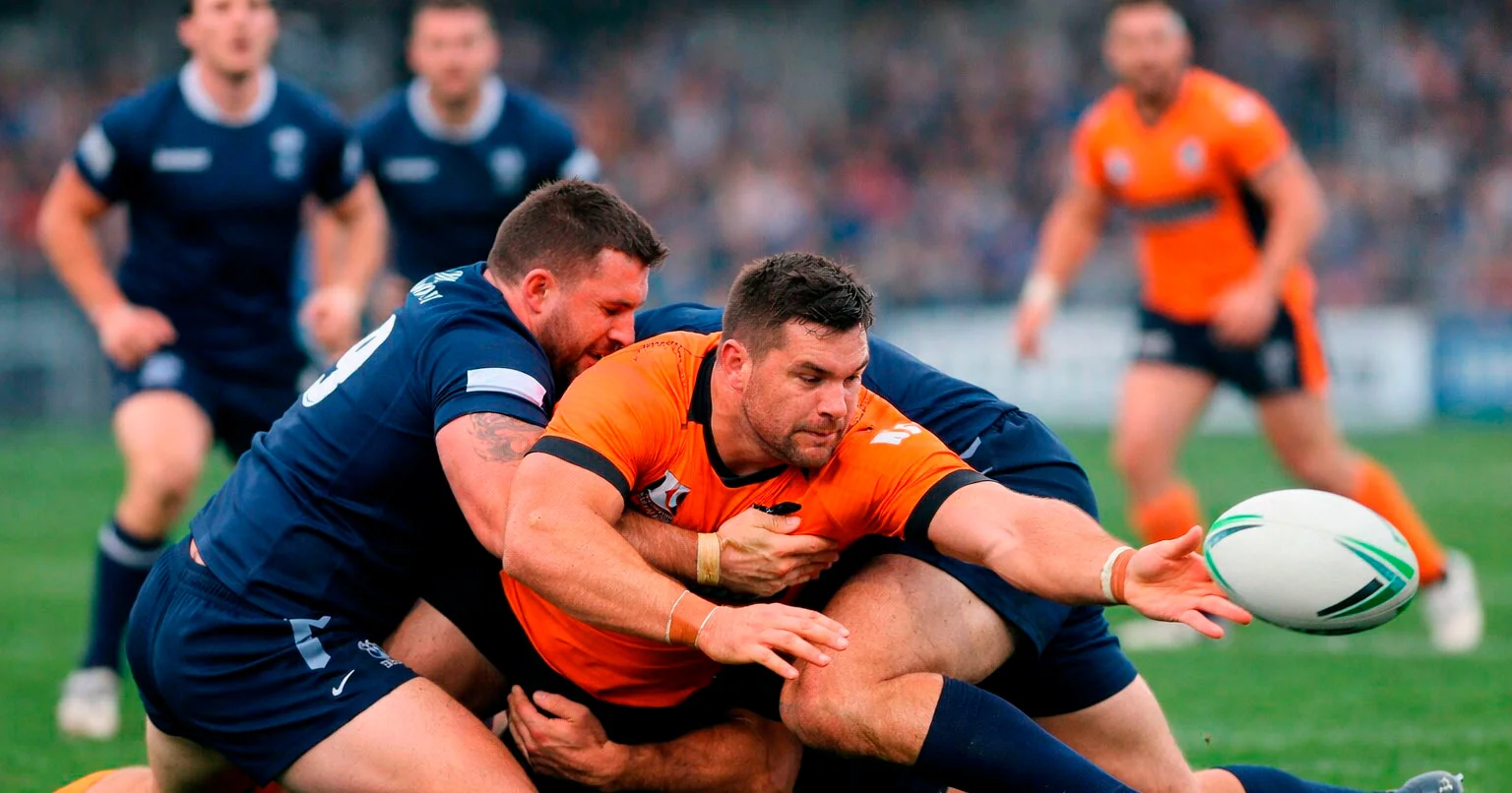
Rugby League emerged from a split with Union in 1895, primarily over disputes about player payments. Today it operates as a completely separate sport with its own rules, governing bodies, and competitions. League is played with 13 players per side, two fewer than Union, which creates more space on the field and typically results in a faster, more open game. The sport has its strongest following in northern England, Australia, New Zealand, and Papua New Guinea, where it essentially functions as the national sport.
The most distinctive feature of League is the tackle count system. When a player is tackled, their team retains possession but must restart play within a few seconds. After six tackles, possession automatically transfers to the opposition, unless the attacking team has advanced into good field position to kick. This creates a structured, territorial game where teams work through their set of six, attempting to make meters before either scoring or kicking the ball downfield to pin opponents in their own territory. The predictability of possession changes makes League more systematic than Union.
For bettors, League’s structured nature offers certain advantages. The game follows more predictable patterns, with completion rates, kicking meters, and set restarts all trackable statistics that inform analysis. You know that teams will have roughly equal opportunities, and matches often come down to execution and error rates rather than the chaotic possession battles that characterize Union. This predictability doesn’t eliminate variance, but it does make statistical analysis more reliable and historical trends more applicable.
How Points Are Scored in Rugby League
Rugby League uses a different scoring system that produces distinct patterns. A try is worth only four points rather than the five awarded in Union. This seemingly small difference compounds over a match, affecting total points markets significantly. Conversion kicks remain worth two points, taken from the same perpendicular spot system used in Union. The combination of four-point tries and two-point conversions means a try plus conversion yields six points, compared to seven in Union.
Penalty goals, like in Union, are worth two points when kicked successfully. However, League offers an alternative in the penalty try, awarded when foul play clearly prevents a certain score. Teams also earn one point for drop goals, compared to three points in Union. This lower value makes drop goals less strategically significant in League, though they still appear occasionally in tight matches, particularly in finals or during challenging weather conditions that make handling difficult.
League also features the golden point system in some competitions during drawn knockout matches or specific regular season rules. If scores are level at full time, teams play additional periods until someone scores any points. This sudden-death format creates unique betting opportunities, as a single penalty or drop goal ends the contest. Understanding which competitions use golden point and how teams perform under this pressure can provide edges in futures markets and series betting.
Side-by-Side Comparison: Union vs League
The differences between these codes extend beyond just scoring values and player numbers. Physical styles diverge considerably, with Union featuring more collisions at rucks and mauls while League emphasizes the one-on-one tackle contest. Match duration remains consistent at 80 minutes for both codes, but the effective playing time differs substantially. League’s quick play-the-ball rule keeps the game moving constantly, while Union’s set pieces and breakdown contests naturally slow the pace.
Set pieces represent perhaps the starkest contrast. Union features contested scrums involving eight forwards from each team, where the ball is fed in and both packs compete for possession. League scrums are essentially uncontested, serving merely as a method to restart play with the team retaining possession. Similarly, Union lineouts involve competitive jumping and lifting to catch thrown balls, creating another arena for turnover opportunities. League has no equivalent, using scrums to restart after the ball goes into touch. These differences fundamentally alter how coaches approach possession and territory.
The tackle area diverges significantly between codes. Union’s breakdown creates a contest where defenders can attempt to steal the ball legally by staying on their feet and competing. This jackal threat means attacking teams must commit multiple players to secure possession, creating a constant battle for numbers. League’s play-the-ball system grants the tackled player time to roll the ball back to a teammate, with no legal way for defenders to compete directly for possession. This security of possession in League makes it easier to predict how many scoring opportunities each team will generate.
| Aspect | Rugby Union | Rugby League |
|---|---|---|
| Players per team | 15 | 13 |
| Try value | 5 points | 4 points |
| Conversion | 2 points | 2 points |
| Penalty goal | 3 points | 2 points |
| Drop goal | 3 points | 1 point |
| Scrums | Contested | Uncontested |
| Possession | Contested at breakdown | Tackle count system (6) |
| Lineouts | Yes | No |
| Primary markets | Northern/Southern Hemisphere | Australia, England, NZ, PNG |
How Betting Markets Differ Between Union and League

The structural differences between codes create meaningfully different betting market behaviors. Total points markets function differently because scoring mechanisms and values differ. Union matches between evenly-matched teams often finish with lower combined scores, particularly in Test match rugby where defensive structures are well-organized and conditions frequently challenge handling. League’s faster pace and guaranteed possession typically produces higher combined scores, though the lower point values partially offset this.
Handicap markets require different analytical frameworks for each code. In Union, dominant forward packs can control territory and possession so thoroughly that weaker opponents barely see the ball. This creates potential for blowouts when elite teams face significantly inferior opposition. League’s structured possession system ensures both teams get opportunities, which tends to limit the extent of blowouts. A team being dominated in League can still score against the run of play by defending their own line for five tackles and then launching a counter-attack from the resulting kick.
Try scorer markets operate differently based on positional dynamics. League wingers and centers score a higher proportion of tries because the structured attack creates predictable opportunities on the edges. Union tries are more evenly distributed across positions, with forwards scoring frequently from driving mauls and close-range pick-and-goes. The anytime try scorer market in Union often offers better value on back-row forwards than casual observers expect, while League rewards those who identify which edge a team favors attacking.
Player props markets reflect these positional differences. League features more consistent individual performances because players have defined roles within structured systems. A halfback will make similar numbers of tackles, a hooker will throw similar numbers of dummies from the ruck, and a fullback will take similar numbers of kick returns game after game. Union’s variable nature means individual performances fluctuate more dramatically based on match context, opposition tactics, and who happens to be at the bottom of rucks. This variance affects the reliability of player total bets.
In-play betting reveals distinct rhythms between codes. League matches progress through recognizable cycles of possession sets, making it easier to anticipate momentum shifts and scoring opportunities. You can often sense when a team is building toward a try because they’re deep in opposition territory with four or five tackles remaining. Union’s unpredictability creates more value opportunities for alert in-play bettors but also more risk. A turnover at the breakdown can instantly create a scoring chance, meaning situations change rapidly and market prices adjust continuously.
Scoring Patterns and Totals Analysis
Analyzing historical scoring data reveals consistent patterns that inform totals betting. Rugby Union Test matches between tier-one nations typically produce combined totals between 35-55 points, with the middle of that range most common. When elite southern hemisphere teams face northern opponents, particularly during November internationals or June tours, totals tend toward the higher end due to faster playing surfaces and attacking philosophies. Six Nations matches, often played in challenging winter conditions, historically produce lower totals.
Rugby League matches in the NRL consistently produce higher combined scores than their Super League counterparts. Australian conditions, with firm pitches and minimal weather interference, allow for superior handling and more completed sets. NRL totals regularly exceed 40 points combined, while Super League matches, played through English winter conditions, often see lines set in the mid-30s. This geographical difference matters significantly for bettors analyzing overs and unders across different competitions.
Seasonal patterns affect scoring differently in each code. Union scoring tends to increase as seasons progress because pitches firm up, players develop cohesion, and teams gain confidence in their attacking structures. Early-season Union matches often feature conservative tactics as teams establish their defensive foundations. League shows less seasonal variation because the structured nature of the game provides consistency regardless of team development stage. However, end-of-season League matches sometimes see increased scoring when teams with nothing to play for face opponents chasing finals positions.
Weather impacts the codes differently when analyzing totals. Rain affects both codes by making handling more difficult, but Union suffers more dramatically because dropped balls create contested situations at the breakdown. A slippery ball in Union leads to knock-ons, turnovers, and disjointed attacking play. In League, the tackle count system means dropped balls simply waste a possession phase rather than creating turnover opportunities. This makes League totals more resilient to weather adjustments, while Union totals should be downgraded significantly when precipitation is forecast.
Top Union Competitions for Betting
The international calendar provides Union’s premium betting opportunities. The Six Nations, contested annually by England, France, Ireland, Wales, Scotland, and Italy, runs from February through March and represents the northern hemisphere’s premier tournament. Betting markets are deep and liquid, with substantial information available about team selections, injuries, and tactical approaches. The tournament’s round-robin format means every match carries significance, particularly as the competition enters its final weeks.
The Rugby Championship, featuring New Zealand, South Africa, Australia, and Argentina, operates during the southern hemisphere’s winter months. This competition historically produces higher-scoring affairs than the Six Nations, partly due to playing conditions and partly due to the attacking philosophies prevalent in southern hemisphere rugby. For bettors, the Rugby Championship offers value through less efficient market pricing compared to the heavily-analyzed Six Nations. European-based bookmakers sometimes misprice southern hemisphere teams due to less intimate knowledge of form and conditions.
The Rugby World Cup, held every four years, represents the sport’s pinnacle and attracts massive betting interest. The tournament’s pool stage offers numerous mismatches where tier-one nations face emerging rugby countries, creating opportunities in handicap markets and try scorer props. Knockout rounds are more competitive but provide their own value through futures markets and increasingly accurate predictions as the tournament progresses. The extended break between pool and knockout stages allows thorough analysis of which teams are peaking at the right moment.
Domestic Union competitions include the United Rugby Championship, Premiership Rugby, and Top 14 in France. These league-format competitions run throughout the season and provide consistent weekly betting opportunities. The URC, spanning teams from Ireland, Wales, Scotland, South Africa, and Italy, creates interesting dynamics with travel and time zone differences. French Top 14 features the highest-paid players globally but also inconsistent team performances due to squad rotation. English Premiership Rugby offers perhaps the most predictable domestic environment, with detailed statistical tracking and comprehensive media coverage.
Top League Competitions for Betting
Australia’s NRL remains Rugby League’s flagship competition, featuring 17 teams competing over a regular season before finals playoffs. The NRL attracts substantial betting volume and offers excellent market depth across all bet types. Australian bookmakers are particularly sophisticated in their NRL offerings, meaning market efficiency is high but still offers value for those with genuine analytical edges. The competition runs from March through October, providing consistent weekly betting opportunities across roughly 30 rounds before playoffs.
England’s Super League operates as the northern hemisphere’s premier League competition. Twelve teams compete in a regular season before playoffs determine the champion. Super League betting markets are slightly less efficient than NRL equivalents, partly due to lower overall betting volumes and partly due to the competition receiving less analytical attention from sharp bettors. Weather conditions in northern England create meaningful differences from NRL patterns, affecting totals and handicap lines throughout the season.
State of Origin, the annual representative series between New South Wales and Queensland, generates extraordinary betting interest despite featuring only three matches. These fixtures produce intense, attritional rugby that often defies regular season form. Players perform above their normal levels due to the occasion’s significance, making historical trends and head-to-head records more valuable than recent NRL statistics. The series format, with matches spread across several weeks in the middle of the NRL season, creates specific fatigue and injury considerations for subsequent club rounds.
International League, while less prominent than its Union counterpart, provides occasional betting opportunities through the Rugby League World Cup and test series. The World Cup tournament features substantial mismatches in early rounds, with Australia, New Zealand, and England dominating weaker nations. Test series between the major nations attract significant betting interest, particularly the Four Nations and international tours. These fixtures often feature depleted squads due to club commitments and player fatigue, creating analytical opportunities for those tracking selection news carefully.
Which Format Offers Better Betting Value?
Determining which code offers superior betting value depends partly on your analytical strengths and partly on market efficiency in your available betting markets. Rugby Union receives more comprehensive media coverage globally, which means more information is publicly available but markets are more efficiently priced. League markets, particularly for domestic competitions outside Australia, sometimes feature softer lines that informed bettors can exploit. Neither code is inherently better for betting, but your approach should differ based on these characteristics.
Union’s unpredictability creates both opportunity and risk. The contested nature of possession means any team can potentially upset favorites through dominant forward play or capitalizing on breakdown turnovers. This variance makes outright winners and handicap markets more volatile, which benefits bettors who can accurately assess upset potential. However, it also means that confident predictions fail more frequently than in League, where the better team usually accumulates enough possession to convert their superiority into points.
League’s predictability suits systematic bettors who build models based on statistical inputs. Completion rates, meters gained, tackle efficiency, and possession percentages all correlate reliably with outcomes in League. These metrics are trackable and projectable, meaning historical data provides genuine predictive value. Union statistics matter but interact in more complex ways, making model-building more challenging. If your betting approach relies on quantitative analysis, League’s structured nature provides a more amenable environment.
Market liquidity differs substantially between codes and competitions. Six Nations and Rugby World Cup matches attract enormous betting volume, ensuring tight spreads and minimal market manipulation. NRL markets are similarly liquid within Australian sportsbooks. Super League and secondary Union competitions feature thinner markets where large bets can move lines and opportunities arise to beat closing prices. For bettors wagering significant amounts, primary competitions in either code offer sufficient liquidity, while specialists might find edges in less-followed events.
Strategic Considerations for Each Format

Successful Union betting requires embracing contextual analysis over pure statistical approaches. Match-ups between specific forward packs, the quality of goal-kickers, weather conditions, and historical venue performance all significantly influence outcomes. A team with a dominant scrum can neutralize supposedly superior opponents by controlling possession and territory through set-piece dominance. Bettors should analyze these matchup-specific factors rather than relying solely on league positions or recent results.
League betting rewards consistency in approach and disciplined bankroll management. Because outcomes are somewhat more predictable, the edge per bet tends to be smaller but more reliable. Building a portfolio of small-edge wagers across a season can generate steady returns, whereas searching for home-run bets with massive edges often leads to chasing variance. Tracking your results over hundreds of League bets provides meaningful sample sizes to assess whether your approach generates genuine profit.
Timing bets matters differently between codes. Union team news, released typically 48 hours before kickoff, significantly impacts lines because individual player quality varies dramatically. Knowing that a star fly-half or dominant tighthead prop is unavailable fundamentally changes match dynamics. League team news also matters, but the sport’s reduced reliance on individual brilliance means late changes affect lines less dramatically. For Union, waiting for team announcements often proves wise, while League bettors can more confidently bet early lines.
Live betting strategies diverge considerably. Union’s momentum shifts make in-play betting rewarding for those who recognize turning points. A team gaining scrum dominance, a yellow card to a key defender, or weather conditions changing can all signal opportunities before markets fully adjust. League’s structured nature makes live betting more about projecting whether current patterns will continue. If a team is completing sets at high rates and making meters consistently, projecting that to continue often proves accurate until fatigue intervenes in closing stages.
Both codes reward specialization over generalization. Rather than betting across all Union and League competitions, identifying specific tournaments or leagues where you develop genuine expertise produces better results. Following one competition intensively allows you to recognize patterns, track player development, understand coach tendencies, and identify referee impacts that casual observers miss. The bettor who knows everything about Super League will outperform someone spreading attention across six different competitions.
Conclusion
The distinction between Rugby Union and Rugby League extends far beyond trivia for serious bettors. Each code produces fundamentally different games with unique betting characteristics, scoring patterns, and market behaviors. Union offers complexity, unpredictability, and the romance of contested possession. League provides structure, statistical reliability, and systematic betting opportunities. Neither is inherently superior for wagering purposes, but approaching them with identical strategies guarantees suboptimal results.
Understanding these differences positions you to make informed decisions about where to focus your betting attention and how to analyze matches within each code. Whether you choose to specialize in one format or develop expertise across both, recognizing the structural factors that drive outcomes improves your edge. The depth of rugby betting markets continues to grow as the sport expands globally, creating opportunities for those willing to develop genuine analytical advantages.
Start by honestly assessing your strengths as a bettor. If you thrive on contextual analysis and enjoy studying matchups and conditions, Union’s complexity rewards that approach. If you prefer building statistical models and executing systematic strategies, League’s predictability provides a better foundation. Whichever path you choose, the key is developing deep knowledge rather than surface familiarity. In rugby betting, as in the sport itself, informed commitment beats casual participation every time.
