
Rugby Handicap Betting: Expert Strategies
 Available in US
Handicap betting transforms rugby wagering from a simple exercise in picking winners into a nuanced pursuit requiring genuine analytical skill. When bookmakers set a match between New Zealand and Japan, the moneyline odds offer little value for either side. Everyone knows the All Blacks will win, so backing them yields minimal returns while Japan offers long-shot odds that rarely come through. This is where handicaps enter the equation, creating competitive betting propositions even when the actual contest is decidedly one-sided.
The concept is elegantly simple: bookmakers assign a virtual head start or deficit to level the playing field. Japan might receive a +30.5 point advantage, meaning they effectively start the game with 30.5 points for betting purposes. New Zealand would carry -30.5, requiring them to win by 31 or more points for their handicap backers to collect. Suddenly, an uncompetitive fixture becomes genuinely uncertain. Will the All Blacks demonstrate ruthless efficiency or rest key players and coast to a comfortable but not dominant victory?
Handicap betting accounts for a substantial portion of rugby wagering globally, and for good reason. It offers compelling odds on matches where straight moneyline bets provide little value. It tests bettors’ ability to assess not just who will win but by how much. It rewards those who understand team dynamics, tactical approaches, and match context beyond surface-level analysis. Mastering handicap betting separates serious rugby bettors from casual punters, and this guide provides the foundation for developing that mastery.
Understanding Rugby Handicap Betting Mechanics
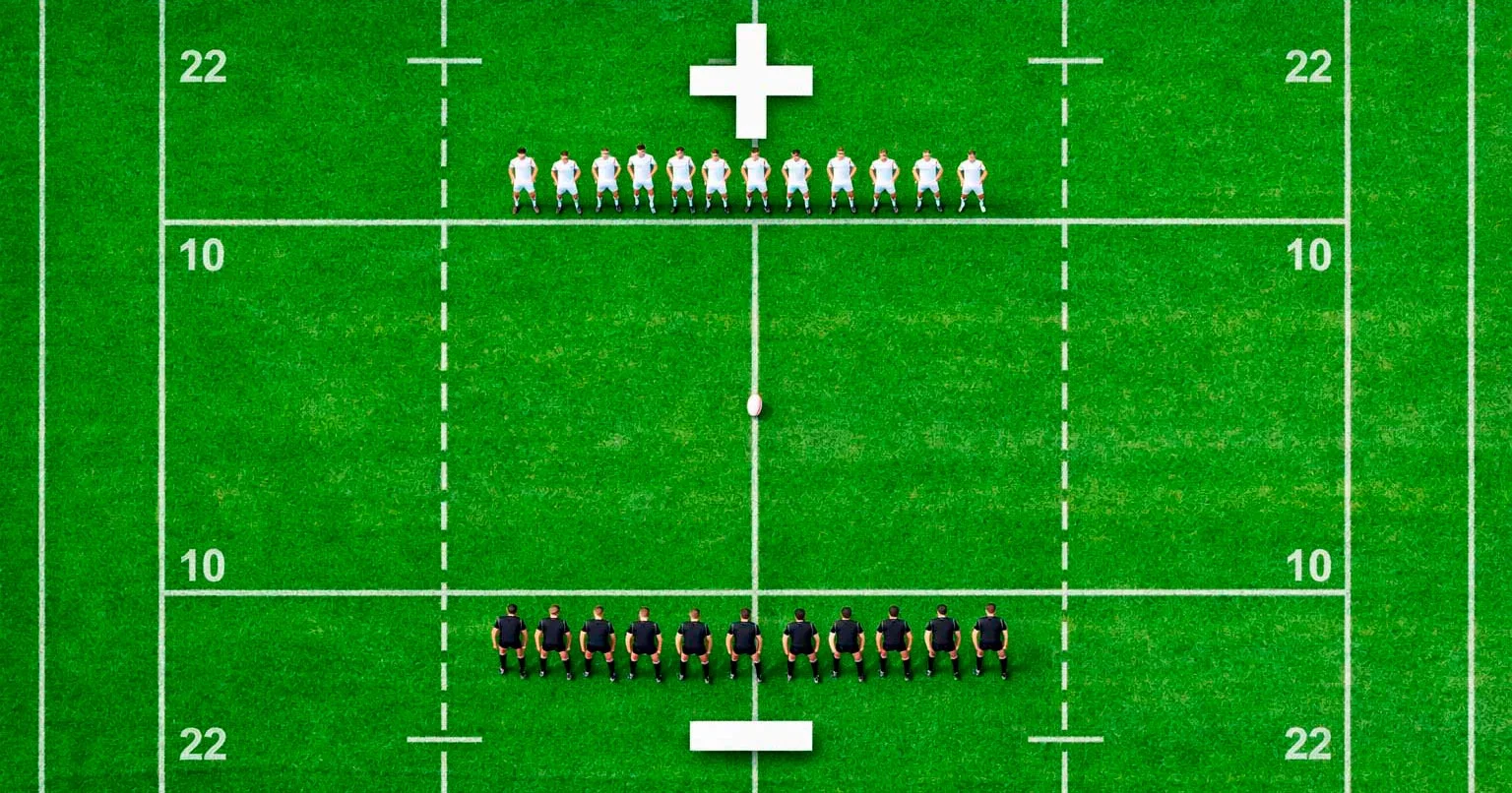
At its core, handicap betting adds or subtracts points from a team’s final score to determine the betting outcome. If you back a team at -10.5, you’re betting that they’ll win by 11 or more points. The actual match could finish 35-20, but for your bet, it’s calculated as 35-30.5, meaning your backed team still wins by 4.5 points in handicap terms. The inverse applies for underdogs. Backing a team at +10.5 means they can lose by up to 10 points and your bet still wins, or any victory or draw produces a winning wager.
The half-point in handicaps serves a specific purpose: eliminating pushes or ties in the betting outcome. When you see -10.5 rather than -10, there’s no scenario where the handicap results in a draw. Either your team covers the spread or they don’t. Some bookmakers do offer whole number handicaps with push rules, but the half-point system dominates modern rugby betting markets because it provides definitive outcomes that simplify settlement and reduce disputes.
Handicap sizes reflect bookmakers’ assessment of relative team strength combined with market sentiment. When lines first open, they represent oddsmakers’ initial evaluation based on historical performance, home advantage, team news, and various other factors. As money flows in, lines adjust to balance action on both sides. A handicap might open at -7.5 and drift to -9.5 if heavy money backs the favorite. Understanding these movements helps identify which side the market favors and whether opportunities exist to take contrarian positions.
The relationship between handicap lines and moneyline odds follows predictable patterns. Roughly speaking, every three points of expected margin corresponds to meaningful shifts in win probability. A team favored by 7-10 points typically wins around 70-75% of the time, while 14-point favorites win approximately 85% or more. These correlations help bettors cross-reference their handicap analysis against moneyline prices to ensure consistency in their assessments.
Asian Handicap vs European Handicap
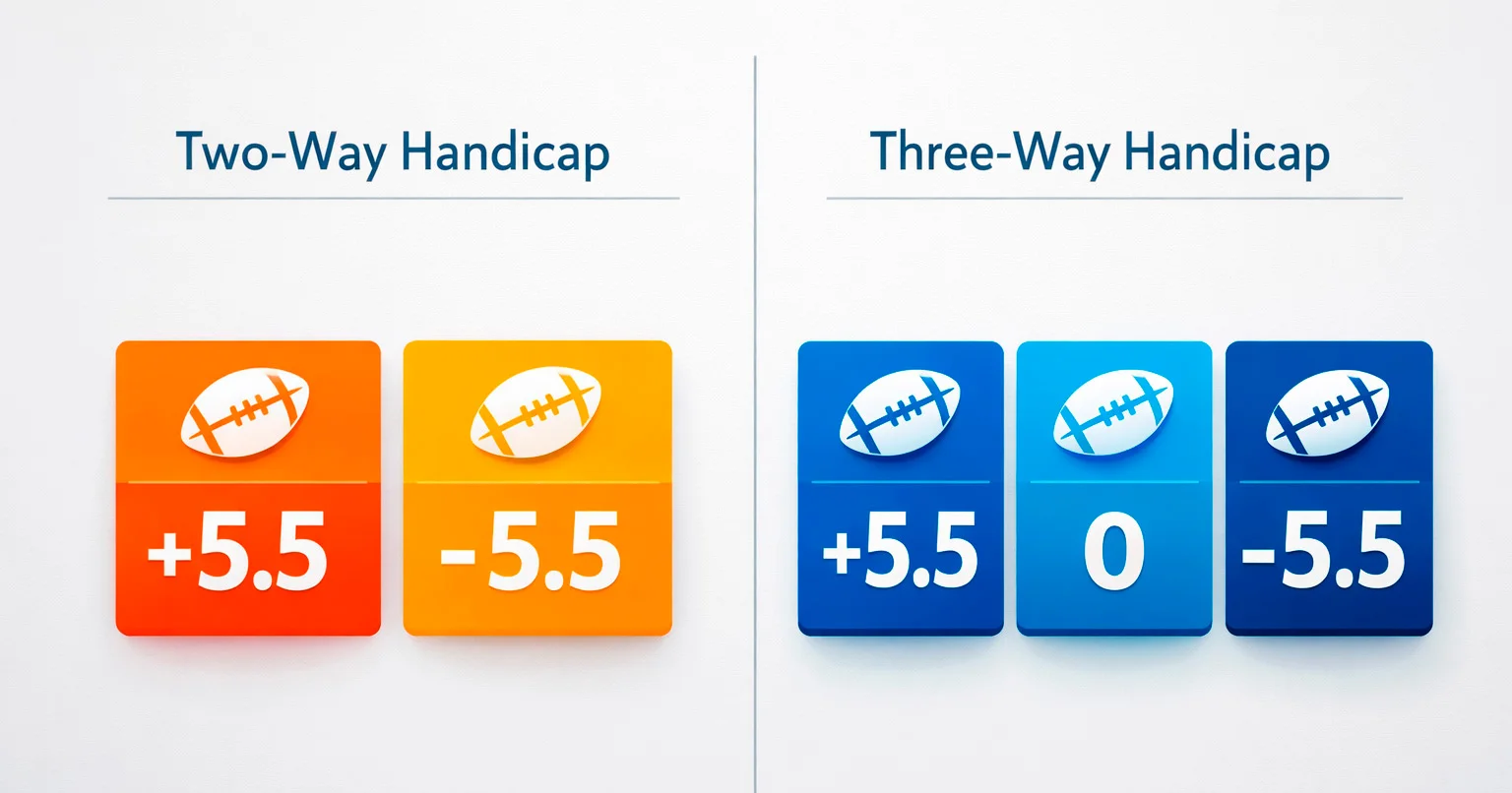
Rugby betting features two primary handicap formats, and understanding both proves essential for navigating different sportsbooks. The Asian handicap system, originally developed for soccer betting, has migrated to rugby and offers quarter-point and half-point lines that eliminate or reduce tie possibilities. Asian handicaps can split your stake across two lines. If you bet on -7.25, half your stake goes on -7.0 and half on -7.5, providing partial wins or losses when results fall between those numbers.
European handicaps, sometimes called three-way handicaps, include the possibility of a tie and therefore offer three potential outcomes. You bet on the favorite to cover, the underdog to cover, or the exact handicap margin to be met resulting in a draw. These markets typically offer higher odds because you’re predicting one of three outcomes rather than two. European handicaps appear less frequently in rugby betting than Asian equivalents, but understanding them remains important when they do appear.
The practical difference between formats affects bankroll management and expected returns. Asian handicaps provide more frequent, smaller wins through the split-stake mechanism, smoothing out variance over time. European handicaps offer higher individual payouts but require more precise predictions. Many professional rugby bettors prefer Asian handicaps for their reduced variance and the psychological comfort of partial wins, while those seeking occasional larger scores might gravitate toward European formats.
Identifying which format your sportsbook offers requires attention because interfaces don’t always make this explicit. Asian handicaps typically display as single numbers with decimals (e.g., -10.5, -7.25), while European handicaps often appear in separate markets labeled as “handicap result” with three options. When comparing lines across bookmakers, ensure you’re evaluating like-for-like formats. A -10.5 Asian handicap and a -10 European handicap with draw option aren’t directly comparable despite appearing similar.
Reading Handicap Lines: Practical Examples

Understanding handicap mechanics theoretically differs from applying them to real matches. Let’s work through several scenarios to build intuition about how these markets function. Consider a Six Nations match between France and Italy where the bookmaker sets France at -18.5. This means France must win by 19 or more points for handicap backers to profit. Italy at +18.5 covers if they lose by 18 or fewer, or if they somehow manage a draw or win.
If the match finishes France 32, Italy 12, France wins by 20 points. Applying the handicap: France 32 minus 18.5 equals 13.5, while Italy remains at 12. France still leads in handicap terms, so France -18.5 wins. Conversely, if the final score is France 27, Italy 14, France wins by 13 points. The handicap calculation: France 27 minus 18.5 equals 8.5, which is less than Italy’s 14. Despite France winning the actual match, Italy +18.5 wins the handicap bet because their virtual 18.5-point head start overcomes the 13-point actual defeat.
Now consider a quarter-line Asian handicap. The same fixture might offer France -18.25, meaning half your stake goes on France -18.0 and half on France -18.5. If France wins by exactly 18 points, the -18.0 portion pushes and you receive that half of your stake back, while the -18.5 portion loses. You lose half your bet overall. If France wins by 19 or more, both portions win. If France wins by 17 or fewer, both portions lose. This split mechanism provides more granular outcomes.
These calculations become second nature with practice, but initially, writing out the mathematics helps avoid costly errors. Before placing any handicap bet, explicitly calculate what final scores would produce winning, losing, and (where applicable) pushing outcomes. This discipline prevents the frustrating experience of backing a team, watching them win convincingly, and then realizing the handicap was larger than you’d processed.
When to Bet on Favorites with Handicaps
Backing favorites on handicaps requires confidence that teams will not merely win but dominate. This situation arises most commonly in mismatches, but also when underrated teams face opponents in poor form or difficult circumstances. The key analytical question isn’t whether the favorite will win, but whether their performance level and the opponent’s resistance combine to produce a margin exceeding the handicap line.
Mismatches in pool stages of major tournaments offer fertile ground for favorite handicap betting. When tier-one nations face emerging rugby countries in World Cup pools, the talent differential often produces blowouts exceeding 50 points. Handicaps in these matches might sit at -35.5 or higher, yet favorites still frequently cover. The analytical challenge involves assessing whether elite teams will maintain intensity throughout or coast after building comfortable leads. Tournament context matters here. Teams needing bonus points pursue additional tries, while those already qualified might rest starters in the second half.
Revenge games and rivalry matches sometimes see favorites cover substantial handicaps through emotional motivation. When a team suffered embarrassing defeat in the previous fixture, they often respond with dominant performances that exceed neutral expectations. Recent examples across rugby history show teams winning by 30+ points in matches where handicaps sat at -14.5 or -17.5, driven by the psychological weight of redemption narratives. Identifying these motivation factors requires following rugby storylines beyond pure statistics.
Home advantage amplifies favorite potential in ways bettors sometimes underestimate. Teams playing at fortress venues like Thomond Park, Ellis Park, or Eden Park consistently outperform road performances. The combination of crowd support, familiar conditions, and eliminated travel fatigue produces measurably larger margins than neutral-site equivalents. When elite teams host at historically dominant venues, handicap lines often don’t fully account for the compounding advantages, creating value on favorites to cover.
Tactical mismatches also favor favorites covering larger handicaps. When a team’s strengths directly exploit an opponent’s weaknesses, margins can exceed market expectations. A dominant scrum facing a weak scrummaging side doesn’t just win set pieces, it demoralizes opponents and creates penalty accumulation that compounds throughout eighty minutes. Identifying these specific matchup advantages requires deeper analysis than looking at overall team ratings.
Finding Value in Underdog Handicaps
Underdog handicap betting often provides superior long-term value despite the psychological discomfort of backing teams to lose. The public generally overestimates favorites, particularly in high-profile matches where casual bettors inflate lines through lopsided action. This creates systematic undervaluation of underdogs receiving points, even when they ultimately lose the match outright.
Certain match contexts reliably produce closer-than-expected results. End-of-season fixtures where favorites have nothing to play for while underdogs are fighting for survival often see reduced margins. The team desperately needing points brings maximum intensity while their opponents coast on reputation and prior accomplishments. Handicaps set based on full-strength form projections may not account for these motivational asymmetries.
Travel and fatigue factors create underdog opportunities in professional rugby’s congested schedule. Northern hemisphere teams touring the southern hemisphere face altitude adjustments, time zone shifts, and accumulated physical toll that degrades performance. The reverse applies during November internationals and June tours. Handicaps derived from neutral-site projections often underestimate these travel effects, providing value on home underdogs or those with shorter travel distances.
Weather conditions systematically favor underdogs in certain situations. Heavy rain, strong wind, or extreme temperatures compress scoring ranges and create chaos that benefits weaker teams. A match projected to finish 35-14 in good conditions might end 15-8 in a monsoon, with the underdog covering a double-digit handicap despite losing. Checking forecasts before bet placement should become automatic habit for serious handicap bettors.
Injury situations sometimes create underdog value when markets overreact to star player absences. While losing a key performer certainly impacts teams, handicap adjustments occasionally exceed the actual performance degradation. If a line moves five points after injury news, consider whether that player’s absence truly affects outcomes by that margin. Modern rugby depth means quality replacements exist, and tactical adjustments can mitigate individual losses.
Handicap Betting in Different Competitions
Competition structure and culture significantly influence handicap betting dynamics. Test match rugby produces different patterns than club rugby, and recognizing these distinctions improves analytical accuracy. International fixtures between tier-one nations typically feature tight margins, with most matches decided by 15 points or fewer. Handicaps in these contexts tend toward single digits, and underdogs cover more frequently than in mismatched club fixtures.
Northern hemisphere Test matches, particularly during autumn internationals and Six Nations, historically produce lower-scoring affairs than southern hemisphere equivalents. This affects handicap sizing and covering rates. A -10.5 handicap in a Six Nations match represents a more dominant favorite than the same line in a Rugby Championship fixture because baseline scoring differs. Adjusting expectations for competition context prevents miscalibrated analysis.
Domestic leagues present their own handicap characteristics. England’s Premiership features considerable parity, with most teams capable of beating any other on given days. Handicaps rarely exceed 14 points even in top-versus-bottom fixtures. France’s Top 14 sees more variance due to squad rotation and travel challenges. Super Rugby competitions feature cross-hemisphere travel that creates significant home advantages and wider handicap ranges.
Knockout rugby behaves differently from regular season or pool matches. Teams approach elimination fixtures with maximum intensity, defensive discipline increases, and scoring typically decreases. Handicaps that seem reasonable based on regular season performances often prove too wide in finals and playoffs. Historical data shows knockout matches consistently producing tighter margins than league fixtures between the same opponents.
Cup competitions with promotion and relegation stakes create unique dynamics. Teams facing relegation bring desperation that produces surprising performances, while those challenging for titles sometimes tighten under pressure. Understanding the stakes each team faces in a given fixture informs handicap analysis beyond pure form assessment.
Live Handicap Betting Strategies

In-play handicap betting offers opportunities distinct from pre-match wagering. Lines adjust continuously during matches, responding to scoring events, injuries, cards, and momentum shifts. The key advantage for live bettors is additional information unavailable before kickoff. You can assess how the match is actually unfolding rather than projecting based on historical patterns.
Identifying momentum shifts before markets fully adjust creates the primary live betting edge. When a team’s scrum suddenly dominates, when a key playmaker exits injured, or when weather conditions change, the match dynamic alters in ways that take time to reflect fully in betting lines. Alert bettors who recognize these shifts can capture favorable prices before adjustments complete.
Scoring sequences in rugby follow certain patterns that inform live handicap betting. Teams that score first often build leads before opponents settle, creating opportunities to back underdogs at enhanced handicaps after early deficits. Conversely, teams that concede early but demonstrate quality often rally, making favorite handicaps attractive when their lines have drifted due to scoreboard pressure.
The timing of your live bets matters significantly. Betting immediately after scoring events captures maximum market inefficiency but requires quick decision-making. Waiting allows more careful analysis but means prices have adjusted further toward efficient levels. Finding your personal balance between speed and deliberation comes with experience. Most successful live bettors develop pre-match plans identifying what scenarios would trigger specific bets, then execute quickly when those situations arise.
Cash-out features on handicap bets create additional strategic considerations. When your bet is winning but circumstances suggest it might not hold, cashing out secures partial profit. When your bet trails but you remain confident, rejecting cash-out offers demonstrates discipline. These decisions should follow pre-determined rules rather than emotional reactions to match flow.
Common Handicap Betting Mistakes
Even experienced bettors make systematic errors in handicap markets that erode profitability. Recognizing these common pitfalls allows conscious avoidance and improved results. The most pervasive mistake involves anchoring on expected match winners rather than margin analysis. Just because a team should win doesn’t mean they’ll cover. Separating winner projection from margin projection requires distinct analytical processes.
Ignoring context that doesn’t appear in statistics undermines many handicap bets. Coaches rotating players before crucial fixtures, teams with nothing to play for, scheduling quirks that create fatigue, and locker room morale issues all affect margins without appearing in form tables. Building information networks through rugby media, podcasts, and insider sources provides context that pure statistical approaches miss.
Chasing losses by increasing handicap stakes after losing streaks represents perhaps the most financially damaging pattern. Variance in handicap betting means even sound approaches endure losing runs. Increasing stakes to recover losses quickly leads to accelerated bankroll depletion when the losing streak continues. Flat staking or proportional betting based on bankroll size provides mathematical protection against this destructive tendency.
Failing to shop for best lines costs bettors significant expected value over time. Different bookmakers offer different handicap lines, and even half-point differences accumulate substantially across hundreds of bets. If one book offers -10.5 and another offers -10.0 at similar odds, the difference matters for outcomes that land exactly on 10 points. Maintaining accounts at multiple sportsbooks and comparing lines before placement should become standard practice.
Overcomplicating analysis leads to paralysis and missed opportunities. While thorough research improves outcomes, seeking perfect information before every bet prevents action entirely. Setting research time limits, developing standardized analytical checklists, and accepting uncertainty as inherent to sports betting allows consistent participation without endless deliberation.
Advanced Handicap Analysis Techniques

Sophisticated handicap betting incorporates techniques beyond basic form analysis. Building predictive models that estimate expected margins provides quantitative foundations for identifying mispriced lines. These models typically incorporate offensive and defensive efficiency ratings, home advantage adjustments, rest differential factors, and strength-of-schedule considerations. Even simple models outperform gut-feel approaches when applied consistently.
Understanding how bookmakers set lines reveals where edges might exist. Initial lines reflect oddsmaker assessment of true probability, but those prices then adjust based on betting action. Lines that move significantly from opening to closing reveal where sharp money disagrees with initial assessments. Tracking line movements over time helps identify which direction offers value when you encounter similar situations in future matches.
Correlating handicap performance with specific match characteristics builds pattern recognition that informs future betting. Perhaps certain referees consistently produce closer matches. Perhaps specific venues favor home teams covering more frequently. Perhaps certain weather patterns compress margins. Logging bet outcomes alongside these variables creates databases that reveal actionable patterns invisible in general statistics.
Adjusting for public bias improves long-term results. Popular teams attract casual betting money that inflates their handicap requirements. The All Blacks, Springboks, and other glamorous sides consistently face inflated lines relative to actual performance. Betting against public money by backing their opponents on handicaps produces systematic value, provided you can emotionally handle backing against teams the world expects to dominate.
Synthesizing multiple information sources creates analytical advantages over bettors relying on single inputs. Combining statistical projections with qualitative assessments, injury reports, weather forecasts, and market movements produces more accurate estimates than any individual source. Developing systematic processes for integrating these inputs ensures consistent application rather than ad-hoc analysis that varies based on mood or available time.
Conclusion
Handicap betting elevates rugby wagering from casual prediction into analytical pursuit. The mechanics are straightforward, adding or subtracting points to create competitive markets, but mastery requires understanding the strategic implications, recognizing common errors, and developing sophisticated analytical approaches. Those willing to invest the necessary effort discover a betting format that rewards genuine skill and punishes lazy analysis.
Start with basic handicap bets on matches where you have genuine knowledge advantages. As your understanding develops, expand into Asian handicaps, live betting, and cross-competition analysis. Track every bet meticulously, analyzing not just wins and losses but the quality of your predictions versus actual outcomes. This feedback loop accelerates learning and reveals blind spots in your approach.
The rugby betting market continues maturing, with increasing competition among bookmakers and growing sophistication among bettors. Edges that existed five years ago have compressed, and future edges will likely compress further. Staying ahead requires continuous learning, regular reassessment of strategies, and honest acknowledgment when approaches stop working. Handicap betting rewards those who treat it seriously and punishes those expecting easy profits. With the foundations this guide provides and your commitment to ongoing improvement, profitable rugby handicap betting becomes an achievable goal rather than a hopeful aspiration.
